If you’re a British expat, or from a European background of either Portuguese, Spanish, French, Italian or Belgian, chances are you would have known about this game back in the 20th Century.
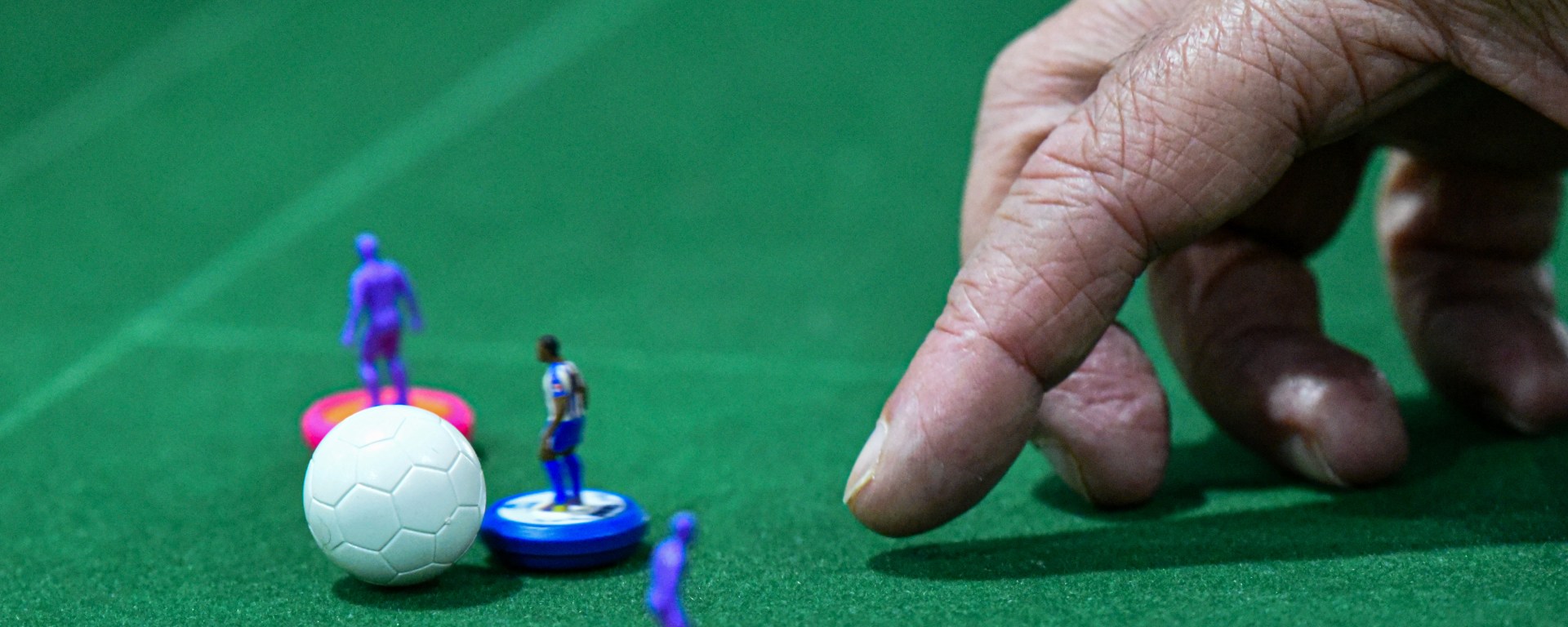
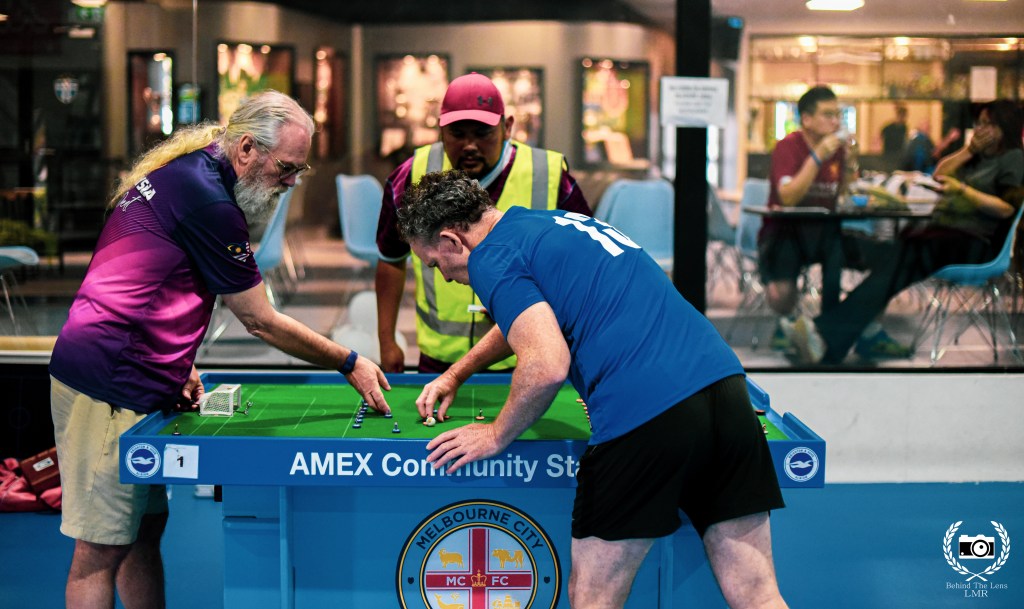
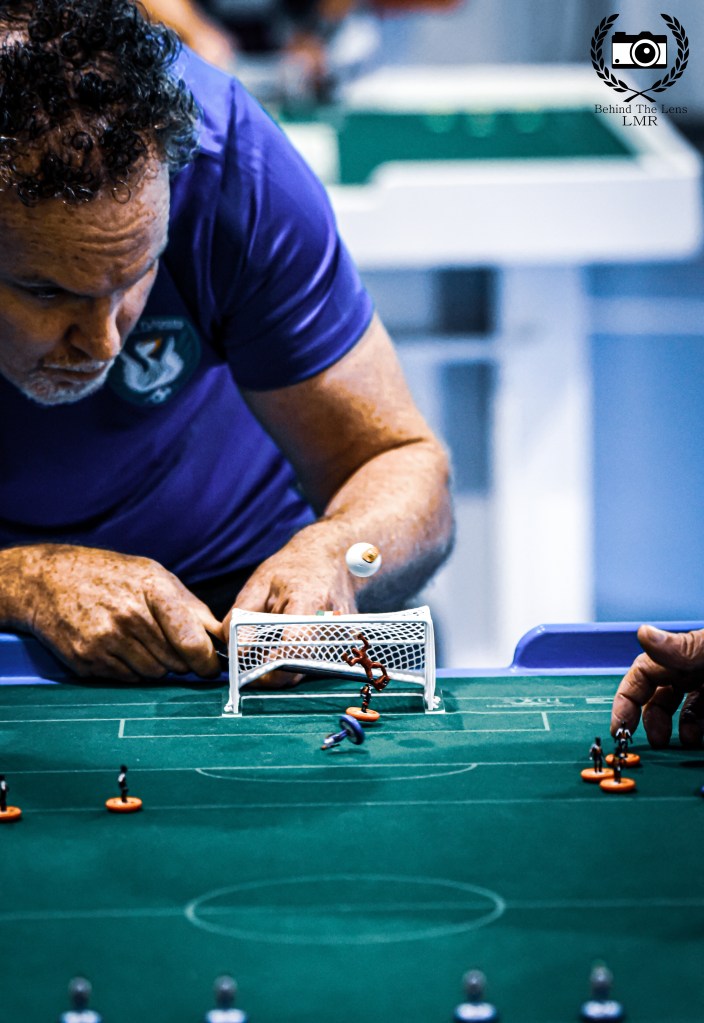
It’s frustrating to describe in words how the game is played to someone who has no idea what this is. Basically you have 10 outfield players on each side of table and you can only flick the plastic base the figures are attached to. It is a fast-paced turn based game where only the attacker is allowed to touch the loose playing ball on the pitch. The defender can only flick their players to ‘block’ the pathway of the attack and not allowed to flick into the ball or into the opponent’s players.
The attacker can have an infinite amount of flicks but the real kicker is that he can only have a maximum of three consecutive touches with one player before he is forced to flick with another figure, but he could continue flicking if he can consistently exchange touches with two or more different figures. If he misses the ball, or the ball goes out of play or touches the defender, the Defending/Attacking roles change. To score, you must dribble into the last quadrant where only the ball needs to be within this space in order to shoot. Offsides, throw-ins and the usual nitty-gritty details of fouls and all are taken into account in this game.
Still got it? I hope so. Take these basic rules in mind and have a look at this game, which is a Teams final event between Belgium and Spain in the 2018 Table Soccer World Cup.
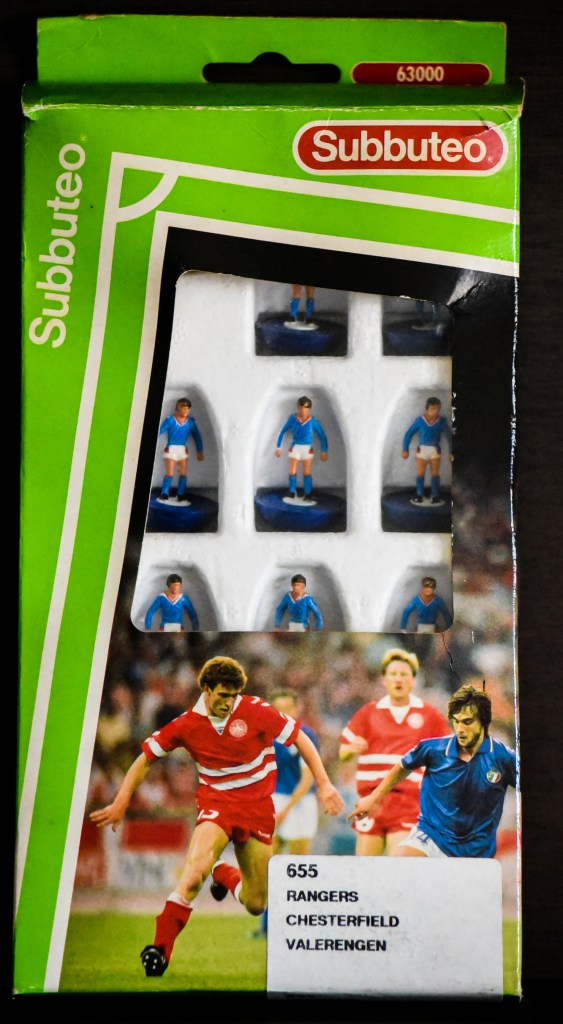
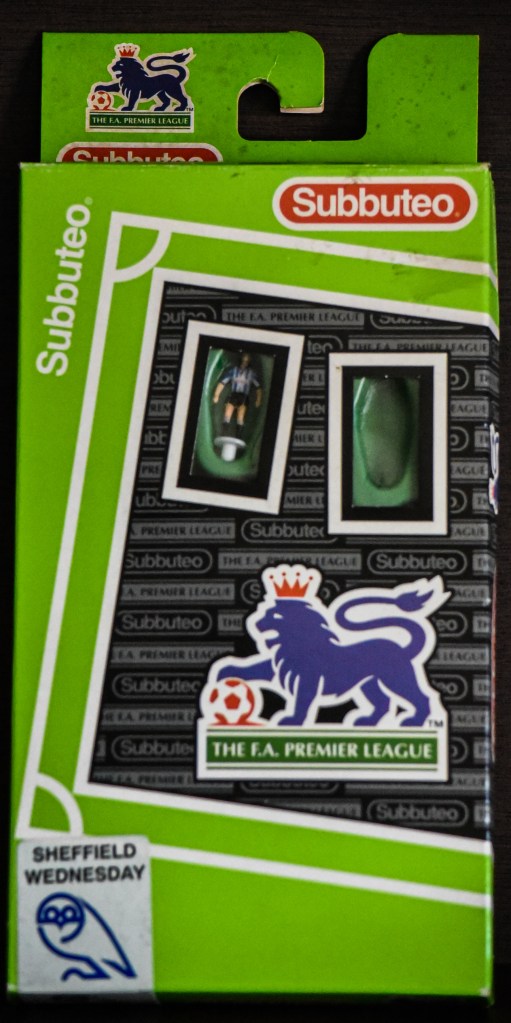
The name ‘Subbuteo’ itself originates from the person who invented it and trademarked in the market, that’s why we don’t really see this term coined in modern events, but you may see them once in a blue moon being sold in specialised board game shops. However there are loads of the product available on Ebay and Facebook Marketplace as such.
“There were several further evolution of figure design. In 1978 the “zombie” figure was introduced to facilitate the machine painting of figures. After much negative feedback, the zombie figure was replaced in 1980 by the “lightweight” figure that continued until the 1990’s. The game was very popular until it suddenly stopped production. The brand was initially relaunched by Hasbro, who for a short time produced flat photo realistic card-style figures on bases, rather than three dimensional figures.
In 2012 Subbuteo returned to the shops with the new style three dimensional rubber figures, launching Subbuteo into its eighth decade of production. Subbuteo also made other things for the collector, such as stands to create a stadium, cups, crowds, policemen and much more. Subbuteo is currently produced by Hasbro. Subbuteo is a registered trademark of Hasbro Inc.”
https://en.wikipedia.org/wiki/Subbuteo
However the game has evolved so much the we do not compete with Subbuteo’s product equipment, but third-party brands that followed the Federation of International Sports Table Football’s criterion of the game. Where they have been engineered to provide the least troublesome in flicking and improved physics in shooting the ball.
Australia has its own small community. Dating as far back as the 70’s, but most notably the nation managed to field its own team in the 1994 World Cup for the very first time and earned their first team win. However these can be discussed in another post. In the modern era, the game went through a resurgence in the early 2010’s and gained media attention from the likes of Fox Sports to cover segments of tournaments we have been running in Sydney by none other than Simon Hill, an A-League commentator and sports journalist, but also an enthusiast of the game.
In 2018, players across Sydney, Brisbane and Perth made the trip to Melbourne, however, believe it or not, representatives from Singapore, Japan, Hong Kong, and an Australian from Sweden made the effort as well. The tournament itself was the Asian Cup where categories consisted of the Individual Open, Club Championships, juniors and women’s. But most prestigious of all, Melbourne hosted an International Series between the 3 nations (Aus, Sing & Jpn) to crown the best in Asia. This tournament in particular set the Australian record of the highest amount of participants in the game [70+].
As of now in March 2020, the Melbourne Grand Prix had just past and now we are in preparations and looking forward to the World Cup this September held in Rome. The weekend that just past consisted of a World Cup qualifying event. With the competition enabling us to register 2 players per category (Open and Veterans) who automatically qualify for the World Cup. Additionally, each country may register 2 reserves per category, who MIGHT qualify, dependant on number of registrations for the World Cup. Therefore this qualifying event consisted of four experienced and competitive players to play each other in a league format to determine the final two spots and nominate reserved spots.
This will mark the third World Cup Australia will compete in the teams event. Official announcement of the squad will come through later on. Stay tuned for a trip down memory lane during Australia’s involvement during the 1990 and 1994 table football world cups in future articles.

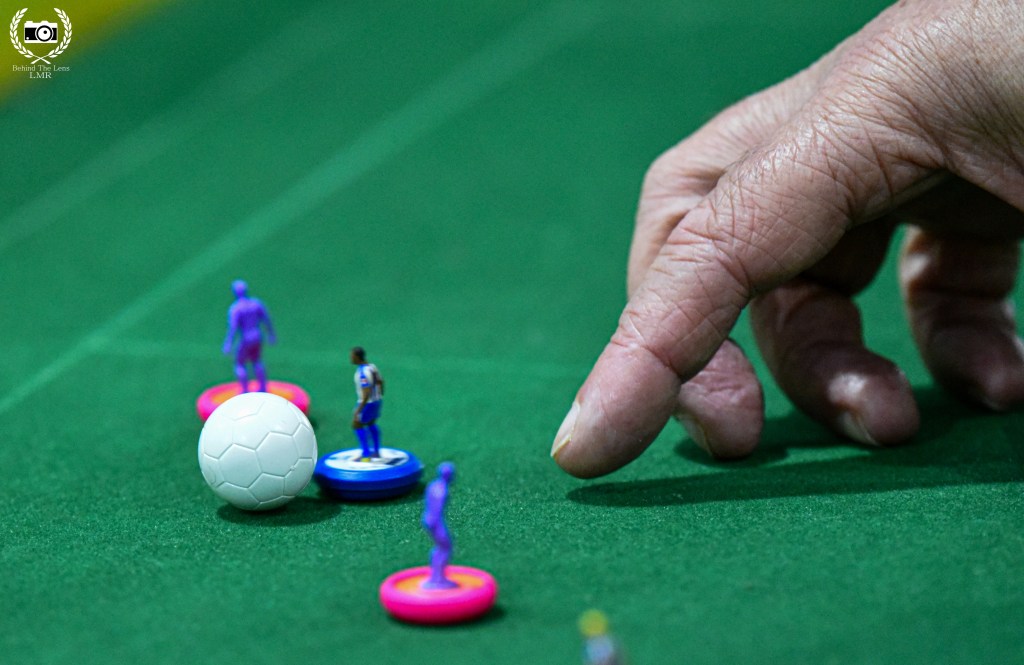
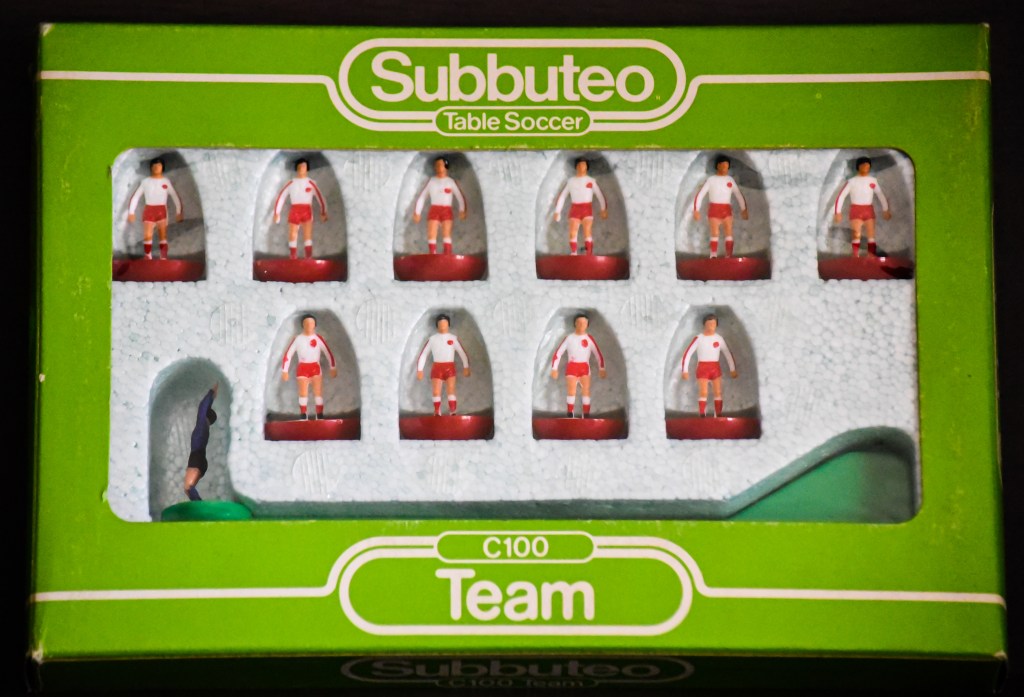
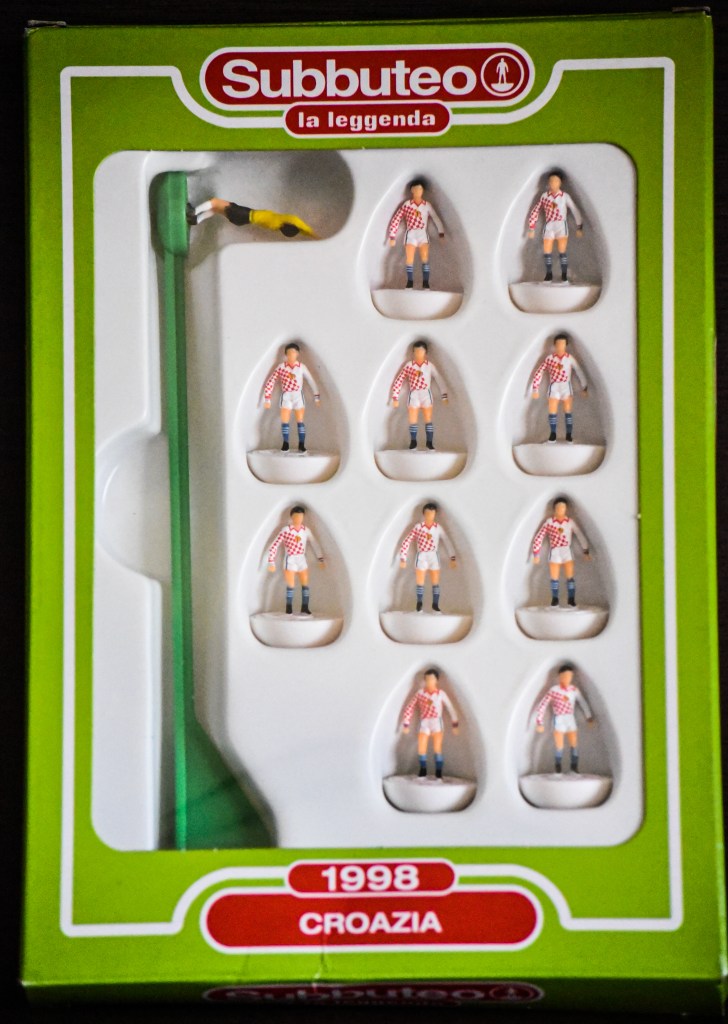
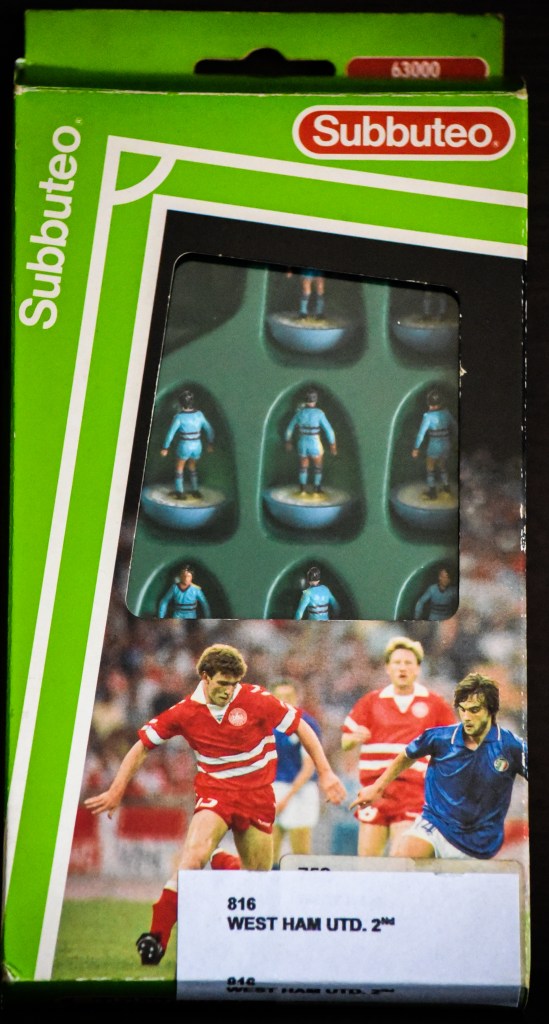
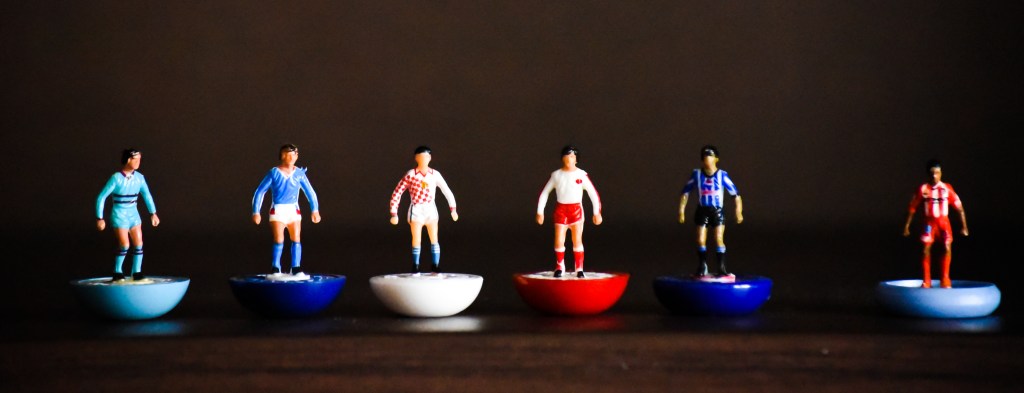
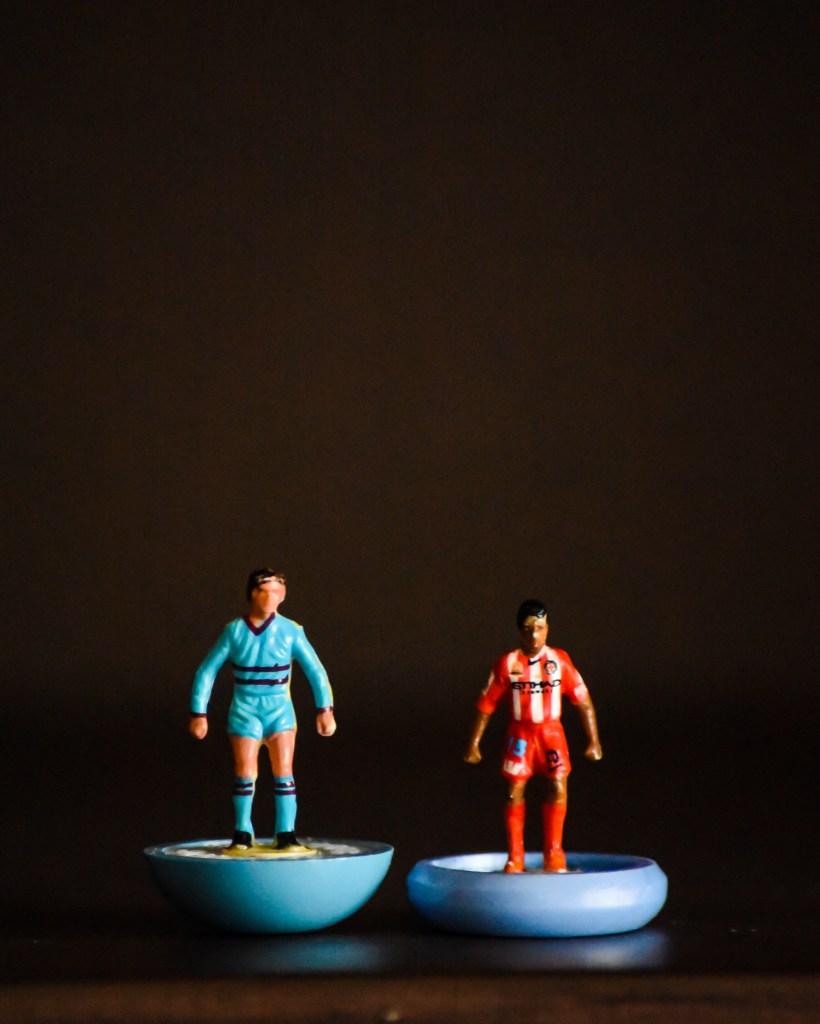
Subbuteo player, in comparison to a ‘professional’ base and a highly detailed figure with decals (right)
 Behind The Lens - LMR